Every Home Needs a Room for Rest
- Emily

- Dec 22, 2025
- 3 min read
I read something recently that stopped me in my tracks.
It was a reflection shared by W Design Collective as they looked back on the lessons they were carrying into the new year. One point in particular stayed with me: every home needs one room that’s meant for relaxation.
I read it on a Sunday the kind of quiet, in-between day that invites reflection and I couldn’t stop thinking about it. Not just as a designer, but as someone who is constantly learning how to rest.

I could immediately imagine a life unfolding there.
My husband sprawled out with the paper open, coffee in hand, feet up on the adjoining chair. A chaise in the corner, practically begging to be wallered in. Small tables gathered close—one for my coffee, another for a book I’m thumbing through, maybe a stool pulled over for a notebook.
In my mind, my boys wander in and out. Someone settles in to read. Someone else plays cards. Another sets up shop on the floor with toys. And suddenly, the room isn’t just a room—it’s doing something.
It’s holding us.
That’s when I felt it: that quiet, almost overwhelming reminder of what a room can do.
Designing Beyond Function
So often, when I work with clients, we talk about making rooms “work hard.” We discuss flexibility, durability, and how a space needs to support multiple uses. And that matters, especially in family homes.
But every once in a while, it’s refreshing to imagine a room that isn’t trying to be productive.
A room that exists simply to be enjoyed.
A room that slows you down instead of asking something from you.
A room that gently invites you to rest.
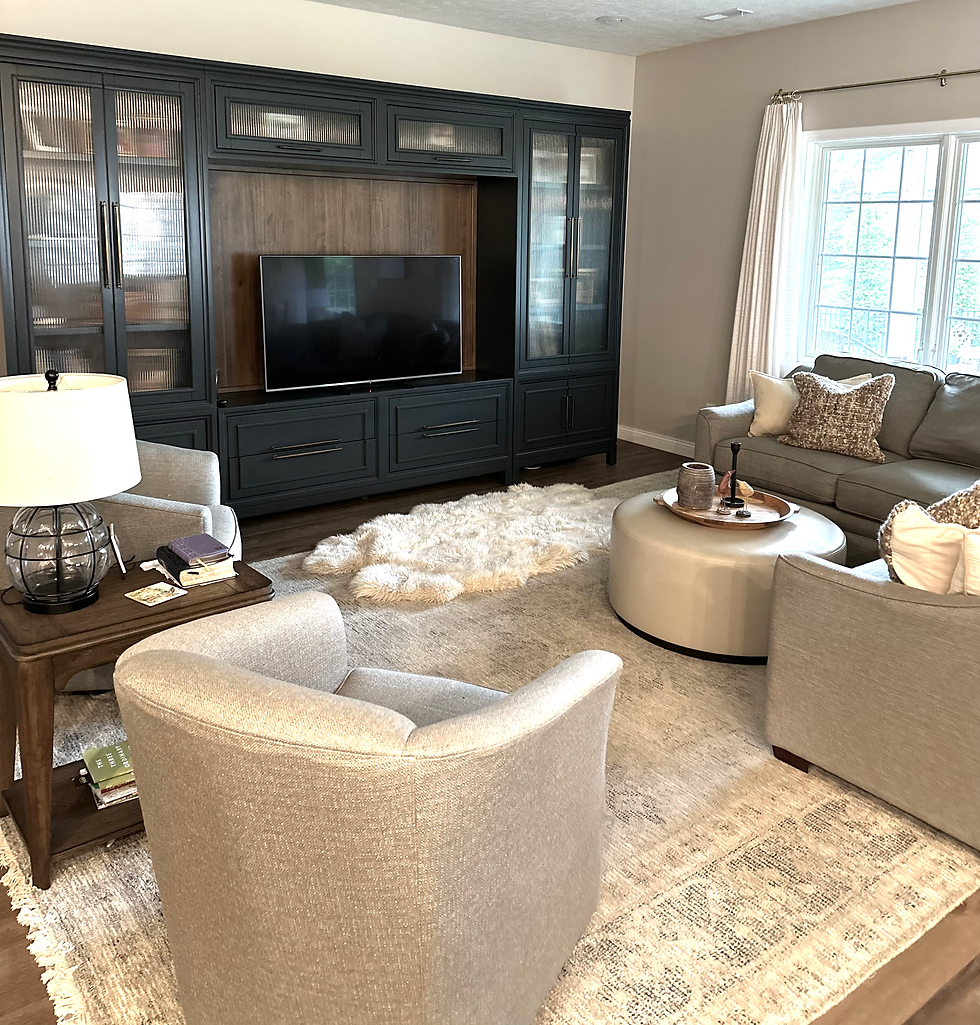
The Oak Hill Drive sunroom that W Design Collective referenced did exactly that. The homeowners already had rooms for watching TV, eating, and exercising. This space created a new intention in the home, one that wasn’t tied to output or efficiency, but to living.

What I love most is that this idea doesn’t require an entire extra room.
For some homes, it might be a sunroom or enclosed porch. For others, it’s a corner by a window, a chaise tucked into a bedroom, or a pair of chairs pulled together in a quiet spot.
The scale doesn’t matter nearly as much as the intention.
Why This Matters (Especially Now)
I think many of us are carrying a quiet exhaustion. One that doesn’t always announce itself loudly, but lingers.
Homes, intentionally or not, often mirror that pace. We move through them accomplishing tasks, checking boxes, always on our way to the next thing.
Design has the power to interrupt that.
A room designed for rest isn’t a luxury in the indulgent sense. It’s a permission slip. It says: you’re allowed to pause here. You don’t have to earn your way into the space. You don’t have to justify being there.
This is why I love design. Not because it creates beautiful backdrops, but because it can shape the way we live inside our days. Thoughtfully designed rooms don’t just hold furniture, they hold people.
And sometimes, they help make us new again.
A Gentle Invitation
As you look at your own home, I’ll offer this simple question:
Where do you rest—not sleep, not watch, not work—but truly rest?
If the answer is unclear, that doesn’t mean something is wrong. It simply means there’s an opportunity. And it doesn’t have to be big. Often, the most meaningful spaces begin quietly, with intention.
That’s a lesson I’m carrying forward—into the new year, and into my work.
Inspiration & Image Credits
This article was inspired by a year-end reflection shared by W Design Collective, specifically their belief that every home deserves a space dedicated to rest and living beautifully.
Images shown are from the Oak Hill Drive Sunroom project by W Design Collective.
View the full project here:
Design: W Design Collective
Designers: Marianne Brown, Georgia Barnes, Paige Hille, J. Scott Anderson
Photography: Malissa Mabey
Styling: Annie Desantis, Sara Ronna
Images are used with attribution and remain the property of their respective creators.


Comments