The Order Most People Design a Living Room Is Backwards
- Emily

- Jan 27
- 3 min read

Example of a Concept Board from Still House Interiors
Most living rooms don’t feel quite right for one simple reason: they were designed in the wrong order.
I see this often. People jump straight into furniture, rugs, and lighting, hoping the room will eventually come together. Individually, the pieces may be beautiful. But the space still feels unsettled, unfinished, or slightly off.
That’s not a taste problem. It's a process problem.
Good design doesn’t start with furniture. It starts with understanding the room itself, how it should feel, how it should function, and what kind of life it is meant to support.
Start with concept and function
Before any layout or furniture decisions are made, the first step is defining the concept of the room.
This means asking thoughtful questions. How do you want this space to feel when you walk into it? Is it meant to be cozy and restorative, or open and social? Is this a space for quiet evenings, family gatherings, focused work, or a mix? What do you love? What do you dislike? What consistently doesn’t work for you?
Concept is not about picking products. It is about naming the mood, function, and overall direction of the space. When this is clear, every decision that follows has purpose instead of being reactive.
Without a defined concept, people tend to make isolated choices, and the room never quite comes together.
Move into space planning
Only after the concept is established does space planning begin.
Layout is never one size fits all. A cozy den, a family living room, and a space that needs to double as a home office may share similar square footage, but they should be planned very differently. Circulation, furniture placement, and balance all need to support how the room is meant to function.
When space planning is done too early, it becomes guesswork. When it is done after the concept is clear, it becomes intentional and effective.
Select, visualize, and refine before purchasing
Furniture selection comes after the space plan is resolved, and this is where working with an interior designer makes a meaningful difference.
Once selections are chosen and refined, I create a visual room view that shows how all of the pieces work together in the space. This allows you to see the scale, layout, and relationships between furniture, lighting, and finishes before anything is purchased.
This visual step does two important things. It helps you feel confident that the design works as a whole, and it creates space for another layer of thoughtful refinement.
Often, this is where small but important adjustments are made. Proportions are corrected, finishes are refined, or a piece is edited out because it does not fully support the concept. These refinements are what elevate a room from simply nice to cohesive and intentional.
When you are designing on your own, this step is usually missing. Decisions are made one at a time, without a clear way to see the full picture. That is why rooms designed without guidance can feel close, but never fully settled.
Why this order matters
When a living room is designed backwards, people tend to keep buying and returning items, hoping something will finally click. The room does not feel right because the early decisions were never clearly defined, and the full picture was never visualized before committing.
Design clarity does not come from more options.
It comes from direction, leading with function, and the ability to step back and see the whole.
Final thought
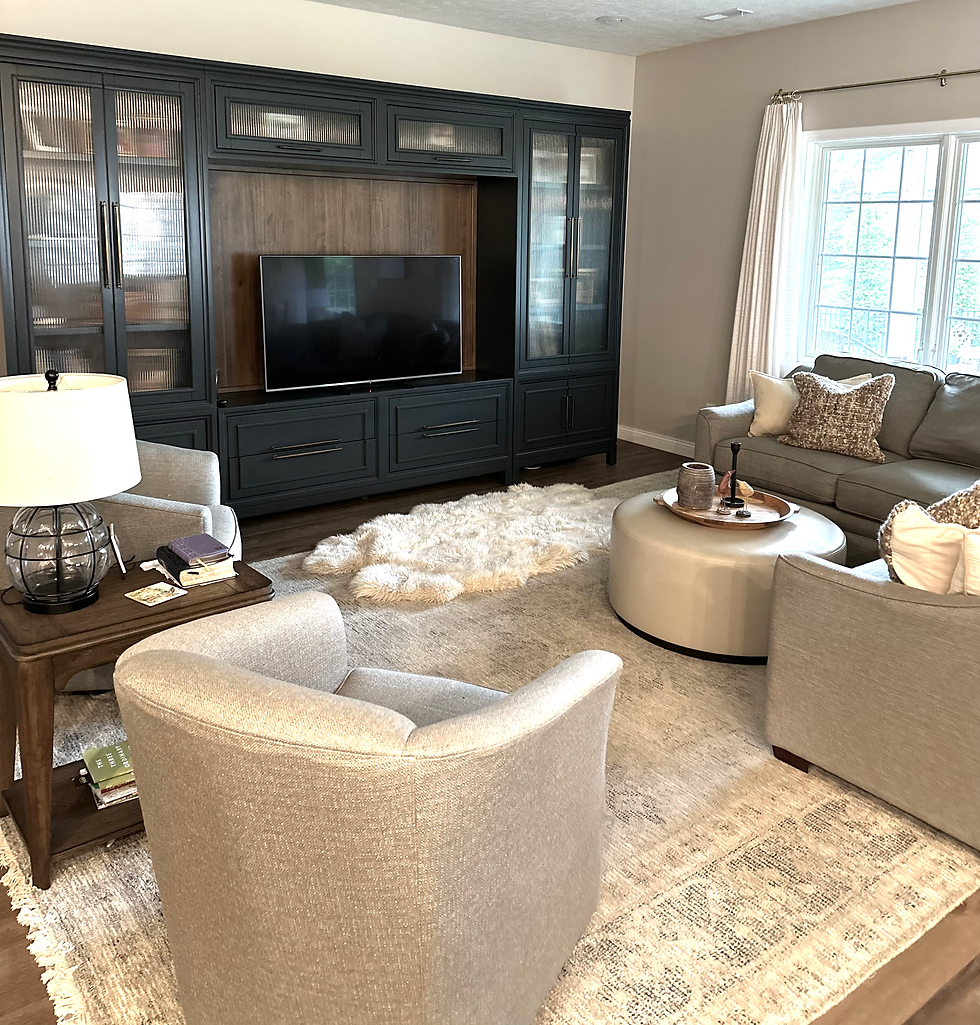
If your living room feels close but not complete, it is likely not about your style or your budget. It is about the order in which decisions were made and whether you ever had the chance to see them come together before committing.
When concept and function lead, space planning supports them, and selections are visualized and refined before purchasing, the room comes into balance and feels right.


Comments